






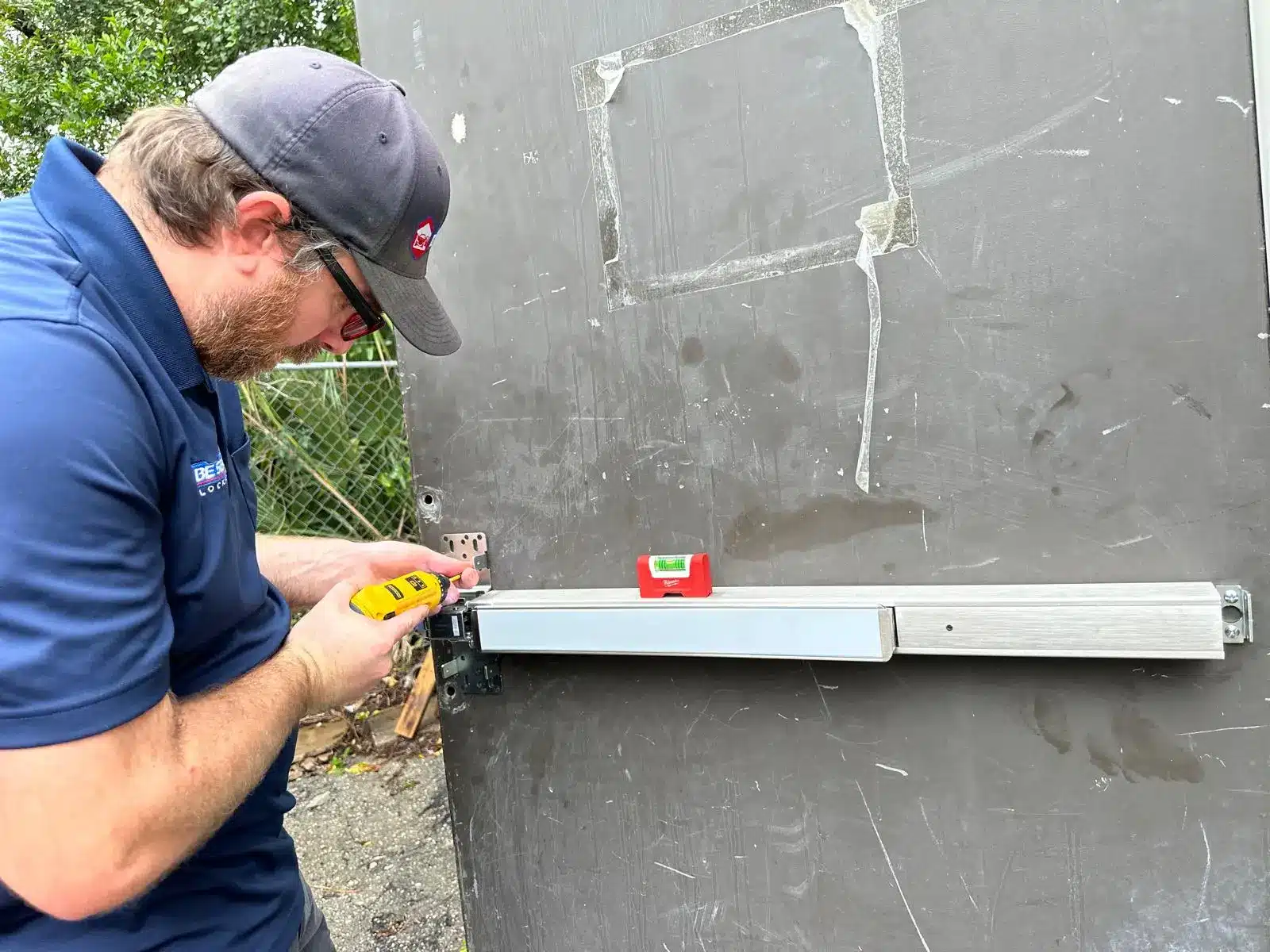
What Counts as Emergency Exit Door Hardware?
Emergency exit door hardware includes any device that controls how a door opens during an evacuation. The most common types found in Ocala commercial properties include:
- Panic bars, also called push bars or crash bars
- Exit devices with dogging functions
- Door closers
- Rim latch mechanisms
Each component has a specific job, and all of them need to be checked together rather than in isolation. If one part is misaligned or worn, the others often compensate incorrectly, which shortens the lifespan of the entire system. Many Ocala businesses also use these doors as controlled access points, putting extra stress on the hardware and making regular inspection even more important. Our commercial locksmith services are frequently called in to address hardware that wore down gradually without any scheduled inspections in place.
What Should You Check on the Door Itself?
Before inspecting the hardware, check the door frame and alignment. A door that has shifted in its frame creates uneven pressure on the latch bolt, which wears the strike plate and bolt mechanism faster than normal. Look for gaps around the door perimeter, warping along the top edge, or resistance when the door swings open and closed. Florida’s humidity affects wooden frames especially, but steel frames can also shift over time if hinges are loose or if the building has settled.
Check the hinges for any lateral movement, which shows up as a slight wobble when you push and pull the door from the handle. Loose hinges allow the door to drop, which puts the latch out of alignment with the strike plate. Tightening hinge screws is a straightforward fix, but if the screws are stripped or the frame is damaged, that is a job for a professional. We handle this type of work regularly as part of broader commercial lock repair calls throughout the Ocala area.
How Do You Inspect Panic Bar and Exit Device Function?
Push the panic bar firmly across its full range of motion. It should move smoothly, retract the latch fully, and release without sticking or grinding. If the bar requires extra force to activate, the internal mechanism may have dried out or the mounting screws may have shifted. If the latch does not retract all the way, the door will bind against the strike plate and may not open cleanly under pressure.
Check whether the panic bar spring returns the device to its resting position quickly and completely. A bar that stays partially depressed after being released means the return spring has weakened. This is a common issue in high-traffic exits and is worth noting during your monthly inspection so you can schedule a repair before the hardware fails entirely. Businesses that use interchangeable core lock systems on their exit doors should also verify that the core is seated properly and that the cylinder turns without resistance.
What Should You Look for on the Door Closer?
The door closer controls how fast the door swings open and how gently it returns to the closed position. During your monthly check, open the door fully and watch it close. The door should slow down in the final few inches and latch cleanly without slamming. If it slams, the closing speed needs adjustment. If the door drifts to a stop slightly ajar, the closer has lost tension and the door will remain unsecured until corrected.
Look at the closer body for any signs of hydraulic fluid leaking. A small oily streak along the arm or body of the closer signals that the seals are failing. Once fluid loss starts, the closer will eventually stop functioning and the door will either swing uncontrolled or fail to close at all. Replacing a door closer is a straightforward on-site repair, and handling it proactively is far less disruptive than waiting for a complete failure during business hours.
Are There Signs That Indicate You Need a Professional Right Away?
Yes. Contact a commercial locksmith immediately if you notice any of the following:
- The panic bar activates but the door does not open
- The latch bolt is visibly cracked or bent
- The door cannot be secured from the inside after closing
- The strike plate has pulled away from the frame or the door shows frame damage near the latch
If your Ocala business had a break-in or attempted entry, the exit hardware should be inspected along with the primary entry points. Our lock installation services include full door hardware replacement when existing components cannot be adequately repaired. You can also visit the Ocala locksmith services page to get a full picture of what is available for your property.
Building a Monthly Inspection Habit That Sticks
Tie your monthly exit door inspections to something you already do, such as a general safety walkthrough or a utility meter check. Keep a simple checklist posted near the maintenance area that covers door alignment, hinge tightness, panic bar function, closer behavior, and latch engagement. Note any issues with a date so you have a record if a service call becomes necessary.
Even a quick five-minute check once a month catches most problems while they are still minor. Businesses with multiple exit doors, high daily foot traffic, or older hardware benefit the most from this kind of routine. When your inspection turns up something that needs repair or a full hardware replacement, contact us for commercial locksmith service in Ocala. Our techs come to your location with the tools and equipment needed to handle exit hardware repairs on-site and get your doors functioning correctly again.